Article
The Founder Who Can’t Learn Becomes the Bottleneck
Founder who stops learning does not usually look stupid.
They look confident.
Busy.
Decisive.
Certain.
And increasingly wrong.
That is what makes the problem so dangerous.
I coach founders, studying personality, and watching them either scale or stal. I have become convinced that learning agility is one of the most important predictors of whether a founder can grow with the company they created.
Not IQ.
Not raw drive.
Not technical skill.
Not even prior success.
Those things matter. But they are not enough.
Because the reflexes that win at 10 people often stop working at 100.
The decision-making speed that saved the company early can become recklessness at scale. The founder’s vision that once pulled everyone forward can become rigidity when the market changes. The control that created quality in the beginning can become the bottleneck that prevents the organization from growing up.
The founder who succeeded through instinct now needs to succeed through systems.
The founder who succeeded through force now needs to succeed through people.
The founder who succeeded by being at the center now needs to build an organization that can function without everything going through them.
That is where many founders get into trouble.
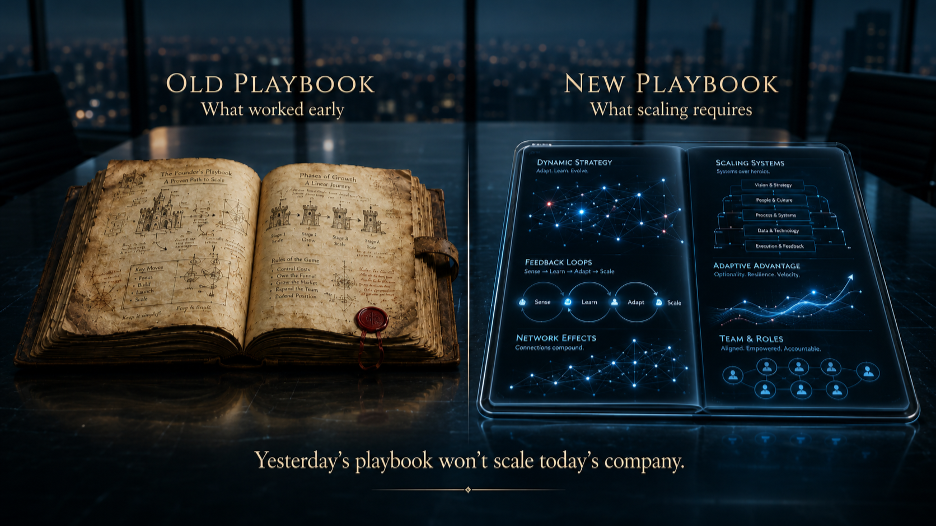
They do not fail because they are unintelligent. They fail because they keep applying yesterday’s playbook with today’s authority.
And when the results deteriorate, they rationalize.
The market is confused.
The team is weak.
The investors are impatient.
The customer does not get it.
Maybe.
But sometimes the real problem is simpler and more uncomfortable:
The founder stopped learning.
What Learning Agility Really Means
Learning agility is not just being open-minded in theory. Plenty of leaders describe themselves as open-minded right up until someone disagrees with them.
Learning agility is the capacity to absorb experience, update your assumptions quickly, and change your behavior without losing your center or your conviction.
It means reality can still teach you.
That sounds simple. It is not.
Founders are often rewarded early for conviction, speed, intensity, and control. Those are useful traits when a company is fragile and every decision feels existential. But over time, the company changes. The job changes. The market changes. The team changes.
The founder has to change too.
Learning agility has several parts:
- Mental agility. The ability to think through complex problems and resist the gravitational pull of the first plausible answer.
- People agility. The ability to understand different kinds of people, read dynamics in real time, and adapt your approach.
- Change agility. A positive orientation toward novelty, uncertainty, and disruption rather than a defensive one.
- Results agility. The ability to deliver outcomes in first-time conditions where the old formulas do not apply.
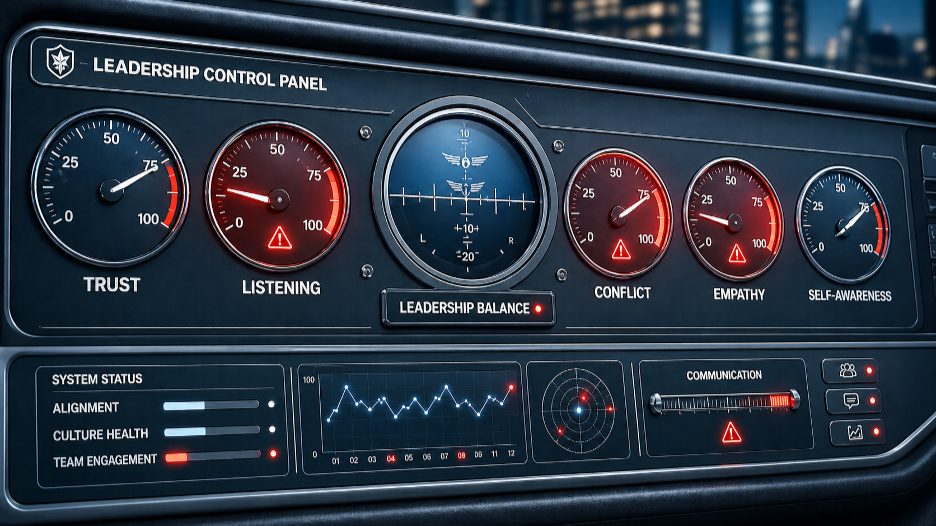
- Self-awareness. The ability to perceive accurately how you are actually doing, not how you hope you are doing.
That last one matters most.
Because you cannot learn from experience if you cannot tell the truth about your own impact.
Busyness Is Not Learning
One of the great founder traps is confusing busyness with learning.
You can be in a thousand new situations and learn nothing from any of them.
You can raise money, hire executives, launch products, fight fires, open markets, lose customers, change strategy, and still not extract the lesson.
That is not learning. That is motion with a calendar invite.
Learning requires reflection.
Not endless self-analysis. Not navel-gazing. Not journaling until everyone around you loses hope.
Just disciplined reflection.
After important events, decisions, conflicts, or surprises, ask yourself:
- What was I trying to accomplish?
- What actually happened?
- What is the gap?
- What does the gap suggest about my model of how things work?
- What will I do differently next time?
Done weekly for a year, that practice alone can change a leader.
Experience does not automatically make you wiser.
Reflected experience does.
How the Ego Turns Experience Into Repetition
Here is where the problem gets deeper.
The ego blocks learning agility at every stage, and it does so in ways most founders do not see coming.
Start with the obvious.
If you are identified with being right, feedback becomes a threat instead of data. You defend instead of inquire. You cherry-pick evidence that supports your existing view and discount what does not. The moment someone challenges your approach, your instinct is not curiosity.
It is protection.
But there is a deeper layer.
Learning agility requires you to update your mental models quickly. That means letting go of the identity you built around the old model.
Early success creates a story.
“I am the visionary who sees what others miss.”
“I am the decisive founder who trusts my gut.”
“I am the one who knows what great looks like.”
“I am the person who moves faster than everyone else.”
That story may have been useful. It may even have been true.
Until it wasn’t.
When the market shifts and your gut starts failing, you now have a psychological problem, not just a business problem.
Updating your strategy may feel like updating your identity.
So you double down.
You blame the team.
You blame the market.
You blame timing.
You blame execution.
Anything is easier than admitting that the operating system that got you here is now becoming a liability.
The Insulation Problem
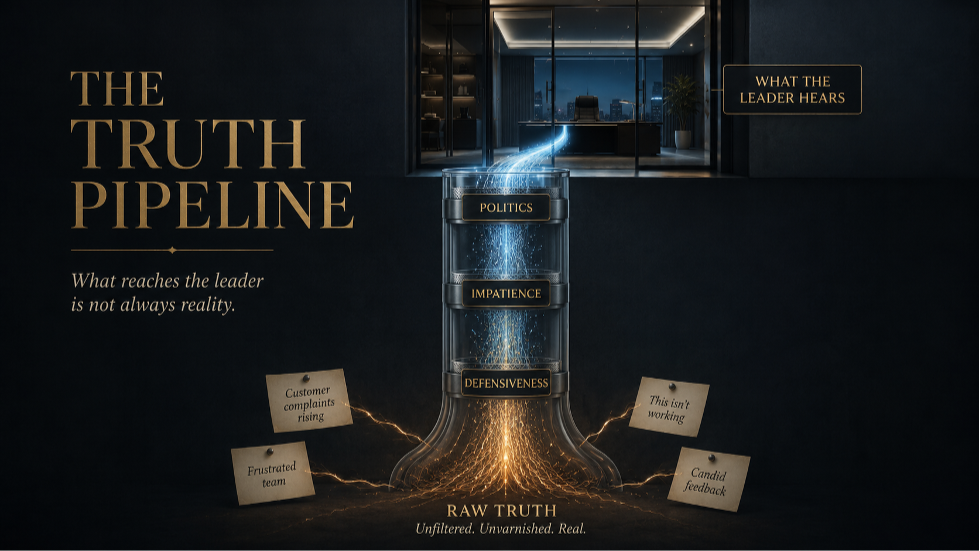
As founders gain authority, they often lose access to reality.
Employees defer more.
They challenge less.
They soften the truth.
They try to read what the founder wants to hear.
They nod.
And once everyone is nodding, the founder may already be in trouble.
This is what I call the insulation problem.
The founder receives a curated version of what is actually happening, filtered through people who fear the founder’s reaction or want the founder’s approval.
Meanwhile, the ego is getting reinforced constantly.
You are the founder.
You raised the money.
You set the vision.
You are in charge.
The cruel irony is that self-awareness can regress during the exact period when the company most needs the founder to grow.
The company is scaling. The role is changing. The stakes are higher. But the feedback loop is weaker.
That is a dangerous combination.
The Founder Derailers I See Most Often
The specific derailers are painfully predictable.
Founders who cannot tolerate ambiguity rush to certainty and then grip it.
Founders who anchor on past success treat it as a blueprint for the future.
Founders who are so action-oriented that they never reflect keep applying the same playbook and wondering why results are deteriorating.
Founders who are loners by nature solve problems alone instead of drawing on the collective intelligence of the team.
Founders who are overconfident genuinely believe they have less to learn than everyone else.
Founders who treat disagreement as disloyalty train the organization to stop telling the truth.
All of these are ego in motion.
Each one protects an identity at the expense of learning.
And each one makes the founder less adaptive right when the company most needs adaptation.
What Agile Leaders Do Differently
The best leaders remain connected to reality.
That is not glamorous, but it is everything.
They build practices that keep them humble about their own limits and curious about what is actually happening.
They reflect consistently. Not quarterly at some beautifully facilitated offsite. Weekly. After real decisions. After real mistakes. After real surprises.
They surround themselves with people who will challenge them. Not professional contrarians. Not cynics. Not people who enjoy being difficult. People whose judgment they trust and who feel safe enough to disagree.
They stay close to the ground. The higher you rise, the more filtered the information becomes. Great leaders stay connected to customers, frontline reality, and the unpolished version of what is happening.
They study outside their domain. A finance executive who studies design. A CEO who studies anthropology. A founder who reads about ecology, military strategy, or psychology. Cross-domain learning interrupts the default thinking of your primary field.
And most importantly, they develop the capacity to observe their own mind.
That is where meditation becomes practical.
Not meditation as spa music for stressed executives.
Meditation as observation.
You sit quietly and watch the mind defend itself. You notice the urge to be right. You notice the fear of irrelevance. You notice the attachment to the old model. You notice the impatience that wants to skip the lesson and get back to action.
That awareness creates space.
And space is where adaptability lives.
The Founder’s Real Test
The old playbook does not announce that it has expired.
It simply starts producing worse results.
That is why founders have to keep learning before the evidence becomes humiliating.
The founder who keeps learning can scale with the company.
The founder who stops learning slowly becomes the constraint.
Not because they lack intelligence.
Not because they lack courage.
Not because they lack work ethic.
But because they are still running yesterday’s operating system in a company that now requires something more.
Learning agility is not a nice-to-have leadership trait.
It is the founder’s survival skill.
The company will keep changing.
The market will keep changing.
The team will keep changing.
The real question is whether the founder can change without feeling personally diminished by the need to change.
That is the mark of a leader who can scale.
Not the leader who is always right.
The leader who can be corrected by reality and still stay strong.
That is learning agility.
And for founders, it may be the difference between building a company that grows and becoming the reason it stops.
share this
Related Articles
Related Articles