For founders
You built the company. Now grow into the leader it needs.
Keep the instincts that launched it. Change the habits that are starting to hold it back.
Your strengths need to work differently now
You started your company because you saw a problem nobody else was solving, and you took it on yourself. That instinct is your greatest strength. As the company grows, it can also become your biggest derailer. Personally fixing what's broken works brilliantly with ten people. With a hundred, it makes you the bottleneck. Nothing is wrong with your strengths. They simply need to work differently at this stage.
Lived it and studied it
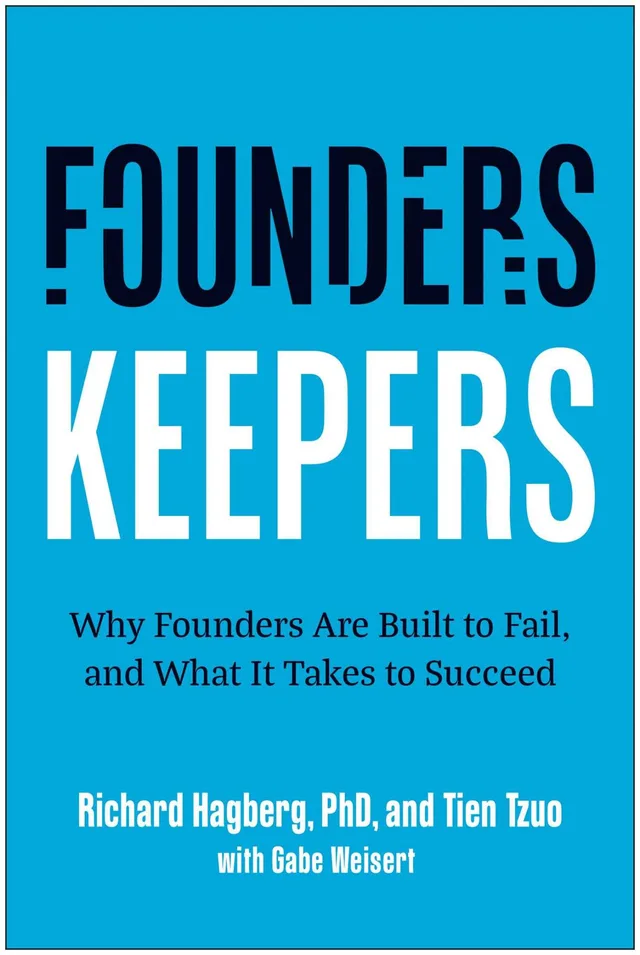
I understand this from both sides of the table. I've founded seven companies myself. For nearly 50 years, as an executive coach with a PhD in counseling psychology, I've worked with founders at this exact turning point. I also coauthored Founders, Keepers, a book about why some founders grow with their companies while others get left behind.
My research on 122 founders points to a clear answer. The founders who scale aren't smarter or more driven than the ones who struggle. They're more adaptable.
They listen when feedback is uncomfortable.
They build teams that think differently than they do.
They delegate authority, not just tasks.
The good news is that each of these can be learned.
Why the shift is so hard
So why is the shift so hard? It isn't effort; you already work harder than almost anyone. The real obstacle is that your founding strengths pull you toward control. A big appetite for risk, total immersion in the work, and a fierce need for independence are exactly what it takes to launch a company. Under pressure, those same traits tighten into control. Just when the company needs you to let go, every instinct says hold on tighter. Once you see that pull, you can choose how to respond to it.
Your team feels it first
Your team feels it long before you do. From your seat, staying close to everything looks like clarity and high standards. From theirs, it feels like micromanagement, second-guessing, and the sense that nothing is good enough until you've touched it. Your strongest people stop taking initiative, and some quietly leave. Most won't tell you why. By the time your board raises it, the conversation is often about succession. Catching it early protects your best people, your board's confidence, and your place in the company you built.
See the pattern before your board does.
Your strategy stays yours
This is where my work begins. I won't second-guess your strategy. That's yours, and you know your business better than anyone. I focus on the patterns underneath how you lead: the need to be right that costs you good people, the fear that shows up as perfectionism, and the identity so fused with the company that you can't step back far enough to lead it. Micromanagement is only the symptom. Change what drives it, and the behavior changes with it. No management technique can do that on its own.
Progress in real decisions, every week
None of this stays theoretical. We work on the decisions in front of you: the executive you need to hire before you feel ready, the cofounder conversation you keep postponing, the responsibility you hand off and then quietly take back. Each insight becomes something you try that week. Then we look honestly at what happened and adjust. You see progress in your company, not in a binder on a shelf.
“I honestly could not have built my company without Richard Hagberg.”
The payoff is concrete. Your decisions get faster. Your delegation gets real. Your leadership team starts carrying weight you used to carry alone. Your board stops holding its breath. You've already proven you can see what nobody else sees. Turn that same clarity on yourself, and you grow from the person who fixes everything into the leader your company needs next.
The framework: timeless principles
The Three Pillars of Scalable Leadership
Most founders are strong in one or two. The work is finding which one is missing.
Visionary Evangelist
Create the future. Inspire belief. Attract the talent and capital required to build it.
Overused: vision becomes distraction. Strategy becomes a moving target.
Relationship Builder
Build trust. Listen. Coach. Resolve conflict. Create real commitment, not compliance.
Underdeveloped: feedback dies, trust erodes, conflict goes underground.
Manager of Execution
Set priorities. Delegate. Install accountability. Build operating rhythm. Reduce founder dependence.
Missing: speed becomes chaos, control becomes the bottleneck.
Start reading
Essays for founders
Ego and Blind Spots
10 Founder Traits That Undermine Growth
Startups might be thrilling, but the cold truth is that most of them fail—and it’s often the founders themselves who unknowingly set the stage for collapse. After…
Letting Go of Control
Breaking Free: The Power of Delegation for Startup Growth
The research case against founder mode: data on 122 founders showing control blocks scale.
Ego and Blind Spots
The 10 Things Stakeholders Want Founders to Change
Being a founder is tough, and if you’re reading this, you know it. You’ve got vision, drive, and creativity. These are your natural strengths and the reasons you…
Ways to work together
Start free
The AI Coach
Get a first read on your founder patterns. Twenty messages to start, no card required.
Coaching
Founder coaching with Dr. Hagberg
Engagements of three, six or twelve months, starting with the Personality and Leadership Profile and the Hagberg 360. Used by founders facing fundraises, CEO transitions, cofounder breaks, and scale inflection points.