Article

Greatness Lies in the Contradictions: How the Best Leaders Integrate Opposites Instead of Choosing Sides

December 2, 2025

The Leadership Tightrope


If you lead long enough, you start to realize something uncomfortable: everything that makes you effective also threatens to undo you.


Your drive becomes impatience. Your confidence becomes stubbornness. Your empathy turns into guilt.


The longer you lead, the more you realize that the job isn’t about choosing one trait over another — it’s about learning to carry both.


That’s what maturity looks like in leadership. It’s not balance. It’s tension well managed.


The False Comfort of Either/Or


Most leaders crave clarity. We want rules. Playbooks. Certainty.


Should I be tough or kind? Decisive or collaborative? Visionary or practical?


The insecure part of the brain hates contradiction. It wants the “right answer.” But leadership lives in the messy middle — the place where both truths exist, and neither feels comfortable.


The best leaders aren’t either/or thinkers. They’re both/and navigators.


A Story from the Field


I once coached a CEO who told me, “I’m torn between holding people accountable and being empathetic.”


I said, “Why do you think those are opposites?”


He paused, then laughed. “Because it’s easier that way.”


Exactly. It’s easier to pick a lane than to learn how to drive in two at once.


He eventually realized the real question wasn’t which side to choose, but when and how to lean into each. He became known as “the fairest tough boss in the building.”


That’s the magic of integration — toughness with tenderness, vision with realism, clarity with compassion.


Why Paradox Feels So Hard


Contradictions feel like hypocrisy when you haven’t made peace with your own complexity.


If you believe you have to be one consistent version of yourself — confident, decisive, inspiring — then every moment of doubt feels like fraud.


But the truth is, great leaders are contradictory because humans are contradictory. You can be grounded and ambitious, humble and proud, certain and still learning.


The work is not to eliminate the tension — it’s to get comfortable feeling it.


The Psychology Behind It


Our brains love binaries because they make the world simple. But complexity — holding opposites — is the mark of advanced thinking.


Psychologists call this integrative complexity — the ability to see multiple perspectives and blend them into a coherent approach.


It’s not compromise; it’s synthesis. It’s saying, “Both are true, and I can move between them without losing my integrity.”

That’s where wisdom lives — in the movement, not the answer.


Funny But True


A client once told me, “I feel like half monk, half gladiator.”


I said, “Congratulations. That means you’re leading.”


Because that’s what the job demands: peace and fight, compassion and steel. If you can’t hold both, you end up overusing one until it breaks you.


The Cost of One-Dimensional Leadership


We’ve all worked for the “results-only” leader — brilliant, efficient, and emotionally tone-deaf. And the “people-first” leader — kind, loyal, and allergic to accountability.


Both are exhausting. Both create lopsided cultures.


When leaders pick a single identity — visionary, disciplinarian, nurturer, driver — they lose range. They become caricatures of their strengths.


True greatness comes from emotional range, not purity.


The Paradox Mindset


Here’s how integrative leaders think differently:

  • They value principles over preferences.
  • They can be decisive without being defensive.
  • They know empathy isn’t weakness and toughness isn’t cruelty.
  • They trade perfection for adaptability.


They’re the ones who can zoom in and out — from the numbers to the people, from the details to the meaning — without losing coherence.


They’re not consistent in behavior. They’re consistent in values.


That’s the difference.


How to Practice Both/And Thinking

  1. Spot your overused strength. The strength that’s hurting you most is the one you lean on too much. If you’re decisive, try listening longer. If you’re compassionate, try being direct faster.
  2. Ask, “What’s the opposite quality trying to teach me?” Impatience teaches urgency; patience teaches perspective. You need both.
  3. Invite your opposite. Bring someone onto your team who balances your extremes — not a mirror, a counterweight.
  4. Hold paradox out loud. Tell your team, “This decision has tension in it — and that’s okay.” Modeling that normalizes complexity for everyone else.


A Moment of Self-Honesty


I’ve spent decades watching leaders chase “clarity” like it’s peace. But peace doesn’t come from eliminating tension. It comes from trusting yourself inside it.


Once you accept that leadership will always feel contradictory, you stop fighting it — and start flowing with it.


You don’t need to be the calmest, toughest, or most visionary person in the room. You just need to be the one who can stay whole while the world pulls you in opposite directions.


Your Challenge This Week


When you catch yourself thinking, “Should I be X or Y?” — stop. Ask instead, “How can I be both?”


Then practice it in one small moment. Be kind and firm. Bold and humble. Fast and thoughtful.


That’s where growth hides — in the discomfort between two truths.


Final Word


The best leaders aren’t balanced. They’re integrated.


They’ve stopped trying to erase their contradictions and started using them as fuel. They’ve learned that leadership isn’t about certainty. It’s about capacity — the capacity to hold complexity without losing your center.


That’s not chaos. That’s mastery.

share this

Related Articles

Related Articles
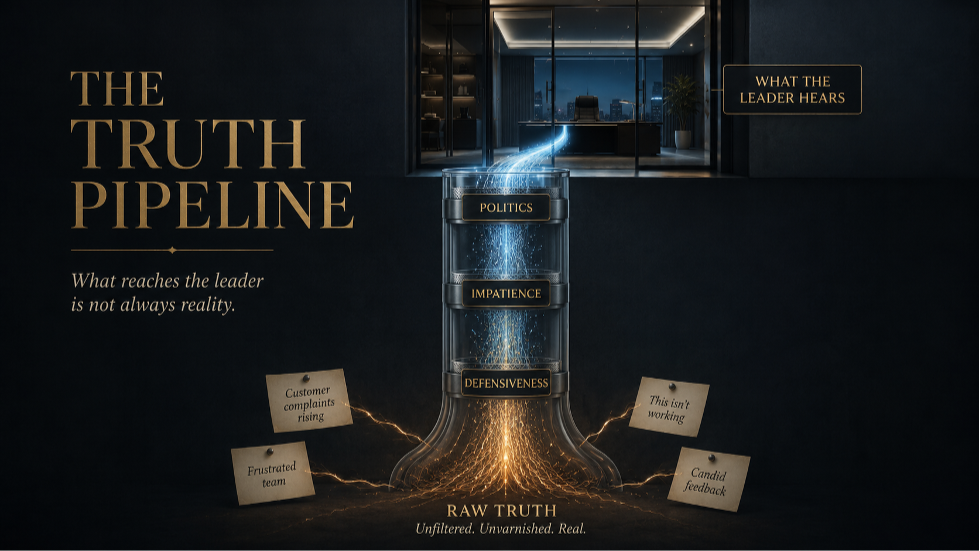
The Courage to Confront: How Real Leaders Balance Candor and Care
By Rich Hagberg December 16, 2025
(Part 2 of The Best Leaders Playbook — Building Trust Systems Series)
Integrity as an Innovation Strategy: Why Moral Clarity Drives Creativity, Not Just Compliance
By Rich Hagberg December 9, 2025
(Part 1 of The Best Leaders Playbook — Building Trust Systems Series)
By Rich Hagberg November 25, 2025
The Curse of “High Standards” Let’s start with a truth that makes a lot of smart leaders squirm: perfectionism isn’t about excellence — it’s about fear. It starts innocently enough. You want things done right. You have taste. You notice what other people miss. People even praise you for it. But slowly, “high standards” turn into a straitjacket. You can’t hit send until the slide looks perfect. You can’t let someone else finish because “they won’t do it the right way.” You stay up tweaking a comma that doesn’t need tweaking. You call it quality. Everyone else calls it exhausting. Why Perfection Feels Safe Perfectionism isn’t driven by pride. It’s driven by anxiety. It’s the voice that says, “If I can control every detail, nothing bad can happen.”  It’s fear of judgment dressed up as professional excellence. The irony is that perfectionists are often the most self-critical people in the room — constantly measuring themselves against an invisible, impossible ruler. They don’t chase perfection because they love quality. They chase it because they hate shame. The Productivity Mirage Perfectionism pretends to be productivity, but it’s actually procrastination with better branding. You tell yourself you’re “improving” the work when you’re really just postponing the moment you might get judged. Every hour you spend obsessing over polish is an hour you could’ve spent creating, delegating, or resting — three things perfectionists are famously terrible at. A Founder’s Wake-Up Call A founder I coached — let’s call him Ryan — was a world-class tinkerer. Every deck, every marketing campaign, every internal email went through him. He’d send back feedback like, “Good, but let’s tighten the phrasing on slide 12.” When his team started missing deadlines, he blamed their “lack of attention to detail.” In truth, they were stuck waiting for his endless revisions. When he finally took a week off, something shocking happened: everything got done. On time. He told me later, “Apparently, I was the bottleneck disguised as quality control.” Exactly. The Neuroscience of “Just One More Edit” Perfectionism lights up the same reward circuits in the brain as addiction. Every time you fix something, you get a tiny hit of relief — like a smoker taking a drag. That’s why you can’t stop. But the more you chase that relief, the narrower your focus becomes. You stop seeing the system. You start obsessing over the pixel. Leadership requires altitude. Perfectionism keeps you at ground level, rearranging the furniture while the building burns. The Lie of the Last 5% You know that feeling when something’s 95% done and you tell yourself, “Just one more pass.” That’s the lie. That final 5% rarely changes the outcome — it just delays it. You’re trading momentum for a false sense of control. I tell my clients, “Your 80% is probably everyone else’s 120%.” Ship it. Learn. Iterate. That’s how progress actually happens. How to Break the Cycle Redefine success. Replace “perfect” with “useful.” Ask, “Will this version move the needle?” If yes, it’s done. Set a timer. Give yourself a fixed window to refine something, then stop — no matter how it feels. Delegate imperfection on purpose. Hand off something messy and resist the urge to “fix” it afterward. That’s your real growth work. Publish before you’re ready. Whether it’s a proposal or a strategy draft, send it early. Feedback beats polish every time. Celebrate iteration. Reward teams for improving quickly, not for getting it “perfect” the first time. Funny but True I once worked with a VP who spent six hours choosing fonts for a quarterly report. When I asked him why, he said, “Details matter.” I said, “To who?” He blinked. Then laughed. “Probably just me.” That’s the moment perfectionism usually breaks — when you realize no one else cares about the thing stealing your sanity. What’s Really at Stake Perfectionism doesn’t just waste time. It kills creativity, trust, and joy. Your team stops taking initiative because they know you’ll re-do their work anyway. You become the bottleneck everyone avoids. And you start confusing fatigue with dedication. Excellence inspires. Perfectionism suffocates. The Emotional Shift: From Control to Curiosity Progress requires permission to experiment — to be wrong. When you trade “perfect” for “better,” you re-open the door to learning. And that’s where real innovation lives. Great leaders don’t aim for flawless execution. They build systems that learn faster than their competitors. That’s progress. Your Challenge This Week Take something you’ve been over-polishing — a presentation, a product feature, an email draft. Send it at 80%. Breathe through the discomfort. When your team improves it, resist saying, “See? I would’ve done that.” Instead, say, “That’s better than I imagined.” Because it is. Final Word Perfection feels like power. But real power is progress — messy, iterative, unfinished progress. Leadership isn’t about getting everything right. It’s about getting the right things moving. So send the draft. Launch the feature. Let good enough be great — and watch your world expand.
ALL ARTICLES