Article
The Courage to Confront: How Real Leaders Balance Candor and Care
(Part 2 of The Best Leaders Playbook — Building Trust Systems Series)

The Meeting Everyone Survived, but No One Spoke In
You’ve been in that room.
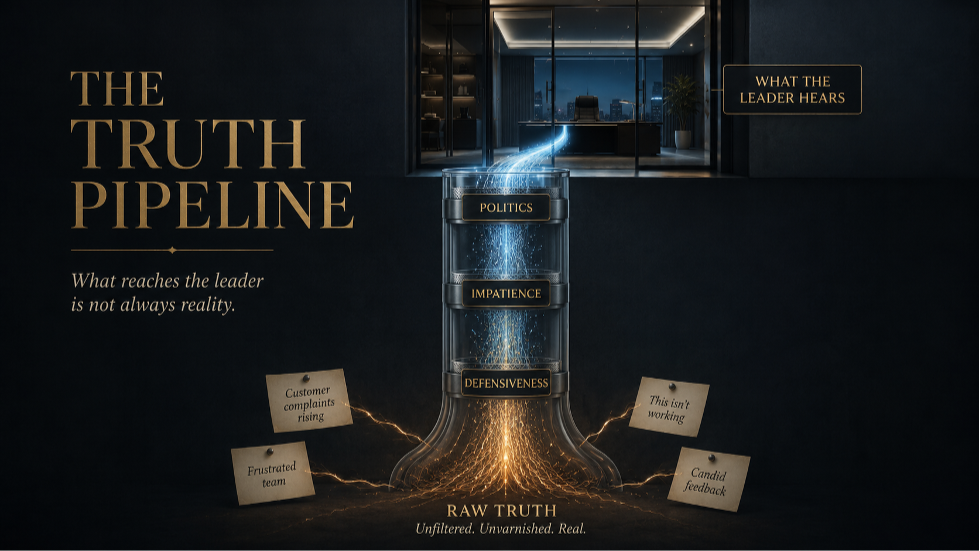
A big issue is sitting there like an elephant in the middle of the table. Everyone knows it’s a problem. Everyone avoids eye contact. The meeting ends with polite agreement and zero progress.
Later, people talk about it privately — in twos and threes, over coffee or Slack.
That’s how cultures slowly rot. Not from shouting matches or scandals, but from quiet avoidance.
The opposite of courage isn’t fear. It’s silence.
Why Leaders Avoid Hard Conversations
Most leaders aren’t cowards; they’re just emotionally self-aware enough to know that confrontation hurts.
You worry about making someone defensive. You worry about being the “bad guy.” You tell yourself you’re protecting morale.
But avoidance doesn’t spare people pain; it just postpones it — and makes it worse.
Every unspoken truth becomes a resentment. Every avoided conversation becomes a rumor.
And one day, you realize you’ve built a culture of nice people who don’t trust each other.
The Trap of False Kindness
I once asked a CEO why he hadn’t talked to his head of sales about underperformance. He said, “She’s been here since the beginning. I don’t want to hurt her feelings.”
I said, “You already have — she just doesn’t know why you’ve stopped looking her in the eye.”
That’s the trap. We confuse kindness with protection.
Real kindness isn’t keeping someone comfortable. It’s helping them grow.
Candor Without Care Is Cruel. Care Without Candor Is Cowardice.
We all know the blunt leader who “tells it like it is.” They deliver feedback like a slap and call it honesty.
Then there’s the opposite — the leader who sugarcoats so much that no one ever knows where they stand.
Both damage trust. One through fear, the other through confusion.
The best leaders learn to hold the tension — to be honest and kind in the same breath.
That’s what courage really looks like.
A Story of Tough Empathy
One VP I coached had an engineer who was brilliant but unreliable. Missed deadlines, constant excuses, but impossible to replace mid-project.
Everyone grumbled behind his back. The VP kept avoiding the talk.
Finally, I asked, “What are you afraid of?” He said, “If I push him too hard, he’ll quit.” I said, “And if you don’t, your team will.”
He had the conversation. It went like this:
“You’re one of the most talented people here. And that’s why this conversation matters. The team can’t depend on you right now, and I know you’re capable of more. What needs to change?”
The engineer didn’t quit. He improved. Because the truth was delivered with respect, not resentment.
Why Honesty Feels Risky (and Isn’t)
We fear that being direct will break relationships. But the opposite is true.
When you tell someone the truth and stay with them through the discomfort, the relationship deepens.
What breaks trust isn’t confrontation — it’s pretense. People can handle hard truth. What they can’t handle is hidden truth.
The Anatomy of a Courageous Conversation
- Lead with belief. “I know you care about this work, and that’s why I want to be honest.”
- Describe the behavior, not the person. “The last two deadlines slipped” beats “You’re unreliable.”
- Name the impact. “It’s putting pressure on the rest of the team.”
- Invite ownership. “What do you think’s getting in the way?”
- End with partnership. “I’m in this with you. Let’s figure it out together.”
That’s candor with care — truth with dignity.
Funny but True
I once asked a CEO when he last gave real feedback. He said, “Does Slack count?”
No. Feedback by emoji doesn’t build trust.
If something matters enough to avoid, it matters enough to say in person.
Why Leaders Don’t Practice Candor
Because it’s emotionally expensive.
It requires you to stay steady while someone else gets uncomfortable. It means tolerating silence, defensiveness, maybe even tears.
That’s why I tell leaders: confrontation is an act of service, not aggression. You’re helping someone face what they need to see.
But to do it well, you have to regulate yourself first. If you can’t manage your own discomfort, you’ll default to avoidance or attack.
The Cultural Ripple Effect
When leaders model honest, caring candor, it spreads. Teams start talking to each other directly instead of triangulating through you. Meetings get shorter. Politics shrink. Accountability grows.
Truth-telling stops being heroic. It becomes normal.
That’s when you know you’ve built real trust.
Your Challenge This Week
Think of one conversation you’ve been avoiding. You already know what it is.
Write down what you’d say if you could say it with equal parts truth and care. Then have that conversation this week.
It won’t be perfect. It will be better than silence.
Final Word
Leadership isn’t about being liked. It’s about being trusted.
And trust is built one hard conversation at a time.
So speak the truth. Kindly, clearly, courageously.
Because when leaders make honesty safe, they don’t just fix problems — they build cultures that don’t need heroes to tell the truth anymore.
share this
Related Articles
Related Articles